By Ace Roofing & Construction Published Last updated
How long a roof lasts depends mainly on the material and how well it's installed and maintained. As broad industry ranges, asphalt shingle roofs commonly last around 20–30 years, flat roof systems like torch-down and TPO around 15–30 years, metal roofs 40 years or more, and tile roofs often longer. In the Bay Area, fog, salt air and strong sun can shorten or stretch those numbers depending on where you live and how the roof is cared for.
These are general ranges, not guarantees. Here's what they mean and how to tell where your roof actually stands.
Typical lifespan by roofing material
These are general ranges commonly cited in the roofing industry. Your roof may do better or worse depending on installation, ventilation, drainage and climate.
- Asphalt shingles: about 20–30 years, with higher-grade shingles toward the upper end
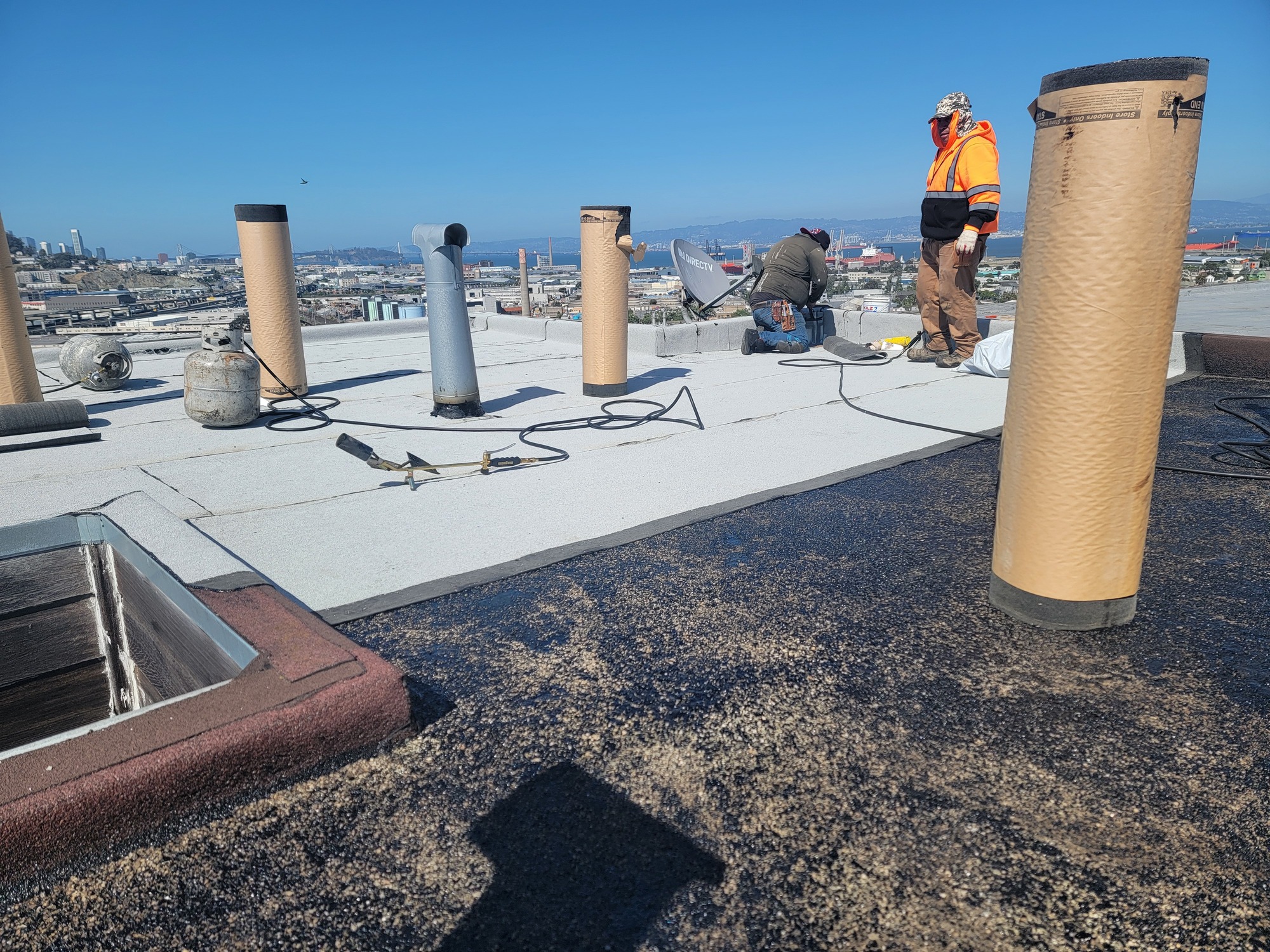
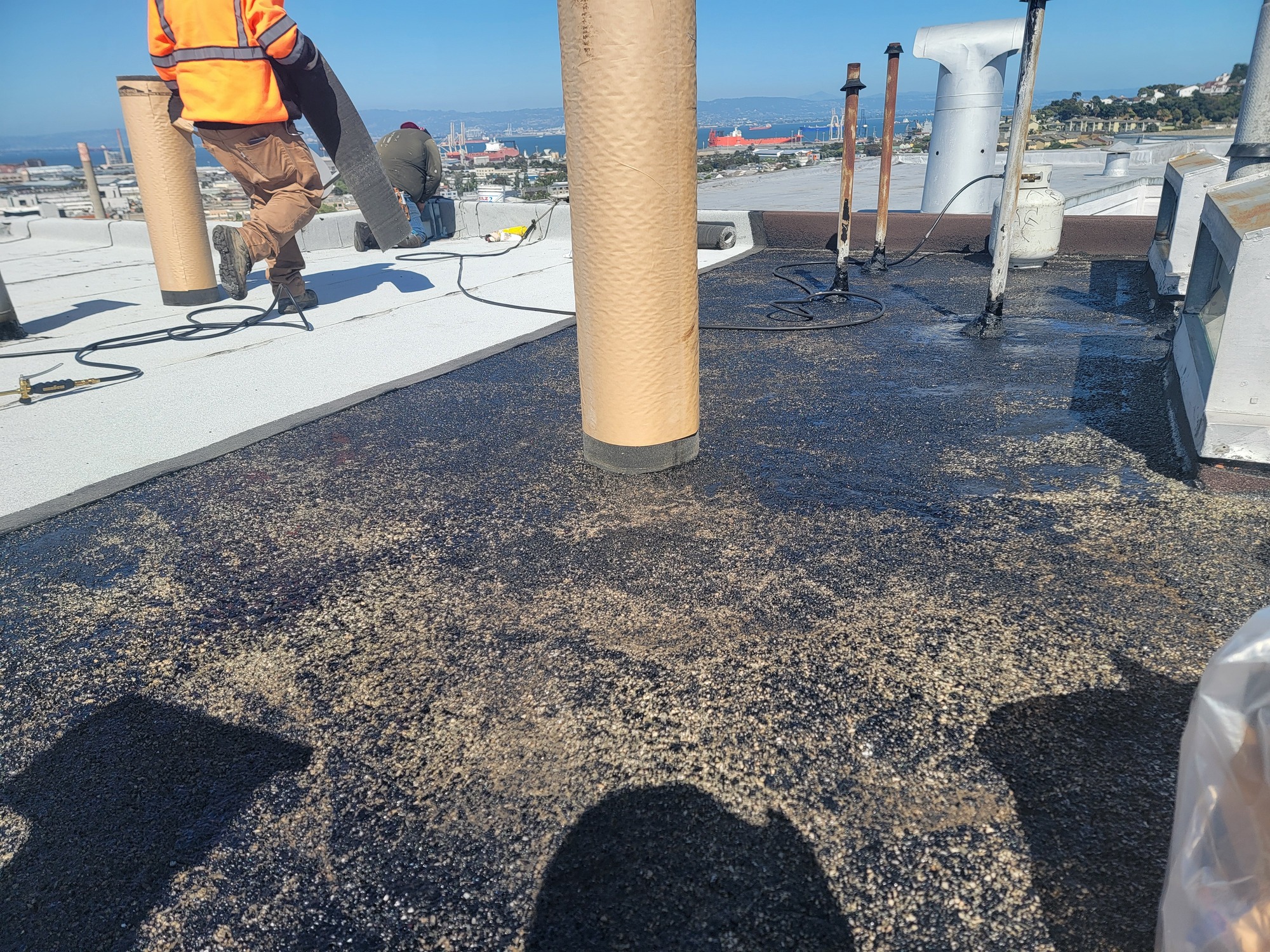
- Torch-down / modified bitumen (flat roofs): about 15–25 years
- TPO (flat roofs): about 20–30 years
- Built-up (tar and gravel) roofs: often around 15–30 years
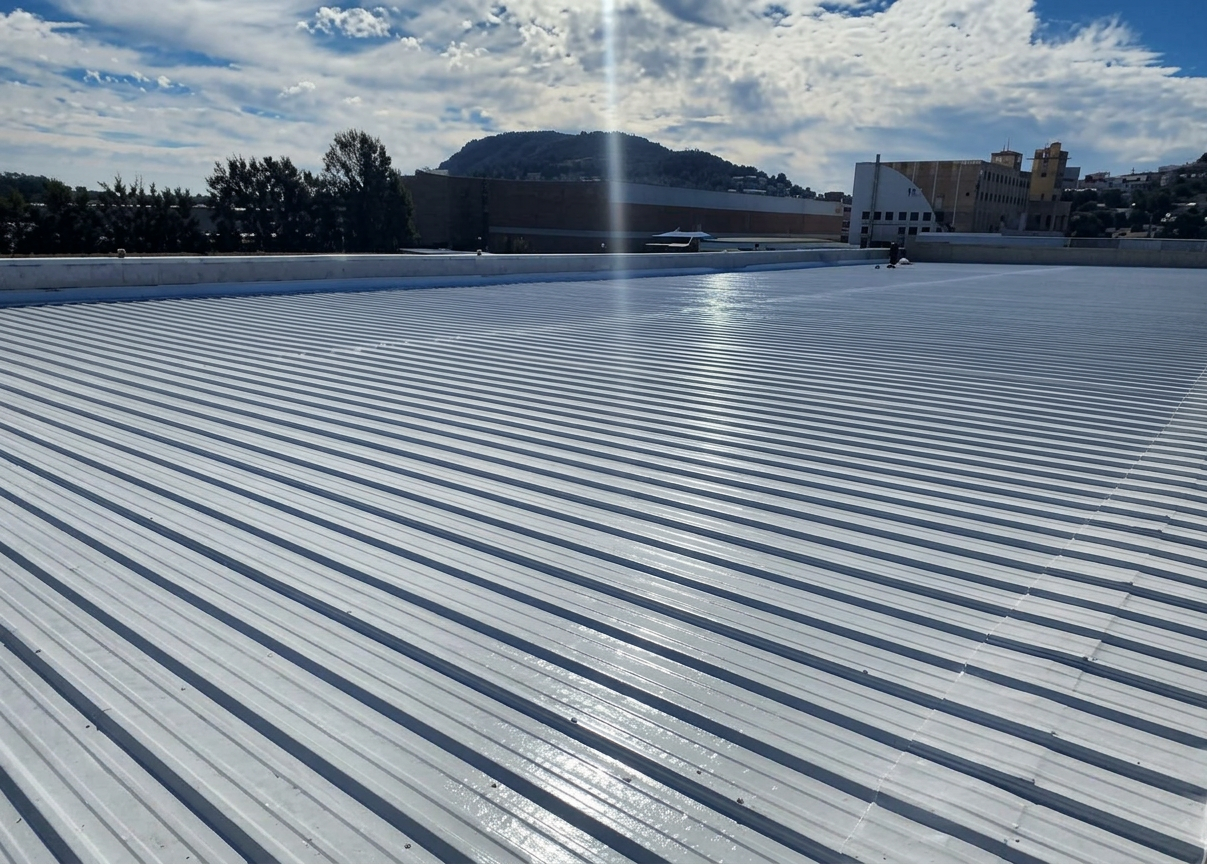
- Metal roofs: often 40 years or more
- Clay and concrete tile: the tile itself can last many decades; the underlayment beneath usually needs replacing sooner
- Wood shake: often around 20–30 years, depending heavily on maintenance and climate
For flat roofs specifically, see torch down vs TPO.
How fog affects your roof
In the Sunset, Richmond and other neighborhoods close to the ocean, fog keeps roofs damp for long stretches. Constant moisture doesn't destroy a roof on its own, but it encourages moss, algae and lichen on shaded surfaces, keeps debris wet, and keeps steady moisture against seams and flashing.
Shaded north-facing slopes and flat roofs with poor drainage are most affected. Keeping roofs clear of debris and moss helps them reach the upper end of their lifespan. Our fog belt roofing materials guide covers this in more detail.
Salt air near the coast and the bay
Homes near the ocean and the bay — the western neighborhoods, parts of Alameda, and waterfront areas — get salt in the air. Salt speeds up corrosion of metal parts: flashing, fasteners, vents and gutters. Even when the main roof covering is fine, corroded flashing can let water in.
Choosing corrosion-resistant metals and coatings, and checking metal details during regular inspections, makes a big difference near the water.
Sun and heat
Neighborhoods on the sunny side of the city and inland areas like Berkeley and Oakland get more direct sun. UV light breaks down roofing over time: shingles lose granules, membranes dry out, and sealants crack. South- and west-facing slopes wear fastest.
Reflective flat roofs like white TPO, coatings on some roofs, and good attic ventilation all help reduce heat stress.
What shortens a roof's life
- Poor drainage and ponding water on flat roofs
- Clogged drains and gutters
- Weak installation, especially at flashing and seams
- Poor attic ventilation that traps heat and moisture
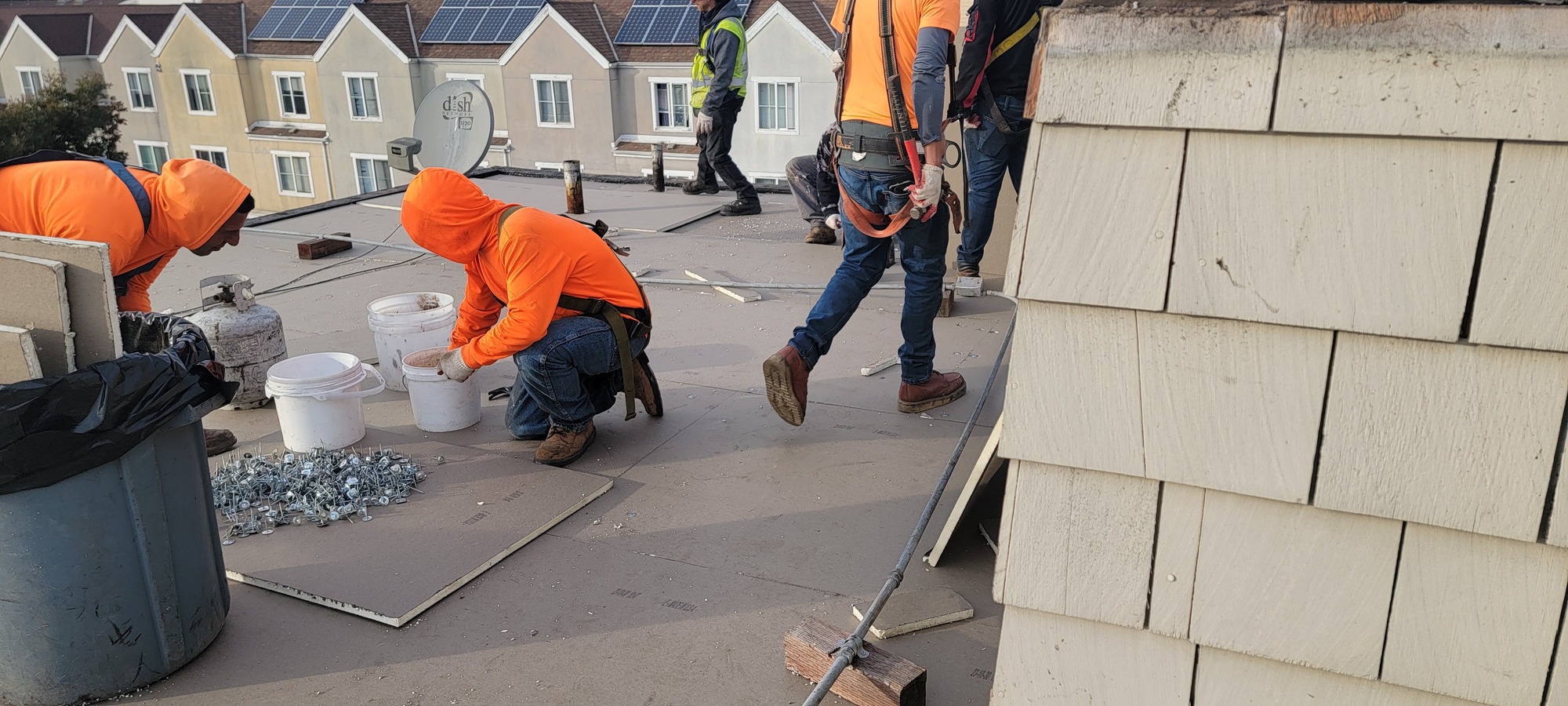
- Foot traffic from other trades without walk pads
- Delayed repairs — small leaks that are left alone
Most of these are within your control. A yearly check and fixing problems early go a long way. Our rainy season prep checklist is a good place to start.
Signs your roof is near the end
- Shingles that are curling, cracking or losing lots of granules
- Flat membranes that are brittle, cracked or blistered across the roof
- Leaks in several different places
- Sagging areas or soft spots
- Patches on top of patches
Age alone isn't a reason to replace a roof. A 25-year-old roof in good condition may have years left; a 12-year-old roof that was poorly installed may not. That's why we believe in repair before replace and look at the actual roof, not just its age.
Matching material to your location
Because conditions vary so much across the Bay Area, the best material for a home in the Outer Sunset may not be the best for one in the Oakland hills. A few general points:
- Near the ocean: pay attention to corrosion-resistant flashing and fasteners, and plan for moss control on shaded slopes
- Sunny, hot exposures: reflective surfaces and good attic ventilation help reduce heat stress
- Fire hazard areas, including some East Bay hills: fire-rated roofing assemblies may be required
- Flat and low-slope roofs: drainage design matters as much as the membrane
We go into material choices for flat roofs in torch down vs TPO.
Maintenance that adds years
Regular maintenance is the cheapest way to get more years out of any roof. Clearing debris, keeping drains open, replacing cracked pipe boots, re-sealing or replacing worn flashing, and fixing small leaks quickly all slow down wear. A roof that gets that care is much more likely to reach the upper end of its lifespan range.
Planning ahead for a replacement
Even if your roof is in good shape, knowing roughly how much life it has left helps you plan. A roof with five or so years left is worth budgeting for now, rather than waiting for a leak to force the decision. A roof near the end of its range may still be fine with targeted repairs for a while, but an inspection tells you how much time you really have.
If you're buying a home, the roof's age and condition should be part of your decision. Our home buyer's roof inspection checklist explains what to ask.
Keep records
Keep a simple file with the date your roof was installed, who installed it, the materials used, any warranty, the permit, and any repairs since. It helps future roofers, inspectors and buyers, and it makes warranty claims much easier. Photos of the roof taken during each inspection are worth keeping in the same file, so you can compare its condition from year to year.
How to find out how much life your roof has left
A roof inspection is the best way to know. We look at the roof surface, flashing, drains and penetrations, and check inside for signs of leaks. You'll get a straight answer on what needs attention and roughly how much life is left. See what happens during a roof inspection.
If repairs will keep it going, our roof repair team can handle them. If it's time for a new roof, see our re-roofing service and what drives roof replacement cost.
Frequently Asked Questions
How long does a roof last in San Francisco?
It depends on the material, installation and location. Broad industry ranges are around 20–30 years for shingles, 15–30 years for flat roof systems, and 40+ years for metal. Fog, salt air and sun can shift those numbers.
Does fog shorten a roof's life?
Constant moisture encourages moss and algae and keeps seams and flashing damp. With good drainage and regular cleaning, fog belt roofs can still reach a normal lifespan.
Should I replace my roof just because it's old?
Not necessarily. Condition matters more than age. An inspection shows whether the roof has years left with repairs or truly needs replacing.
How can I make my roof last longer?
Keep drains and gutters clear, fix small problems quickly, make sure the attic is ventilated, limit foot traffic, and have the roof inspected once a year.
Which roofing material lasts the longest?
Metal and tile generally have the longest lifespans, though tile underlayment needs replacing sooner than the tile itself. The best choice depends on your roof's shape and slope.
Get a free, no-pressure roof inspection
Family-owned in San Francisco since 1996. We'll tell you honestly whether a repair will do. CA Contractor License #C39 1062496.