May 30, 2026
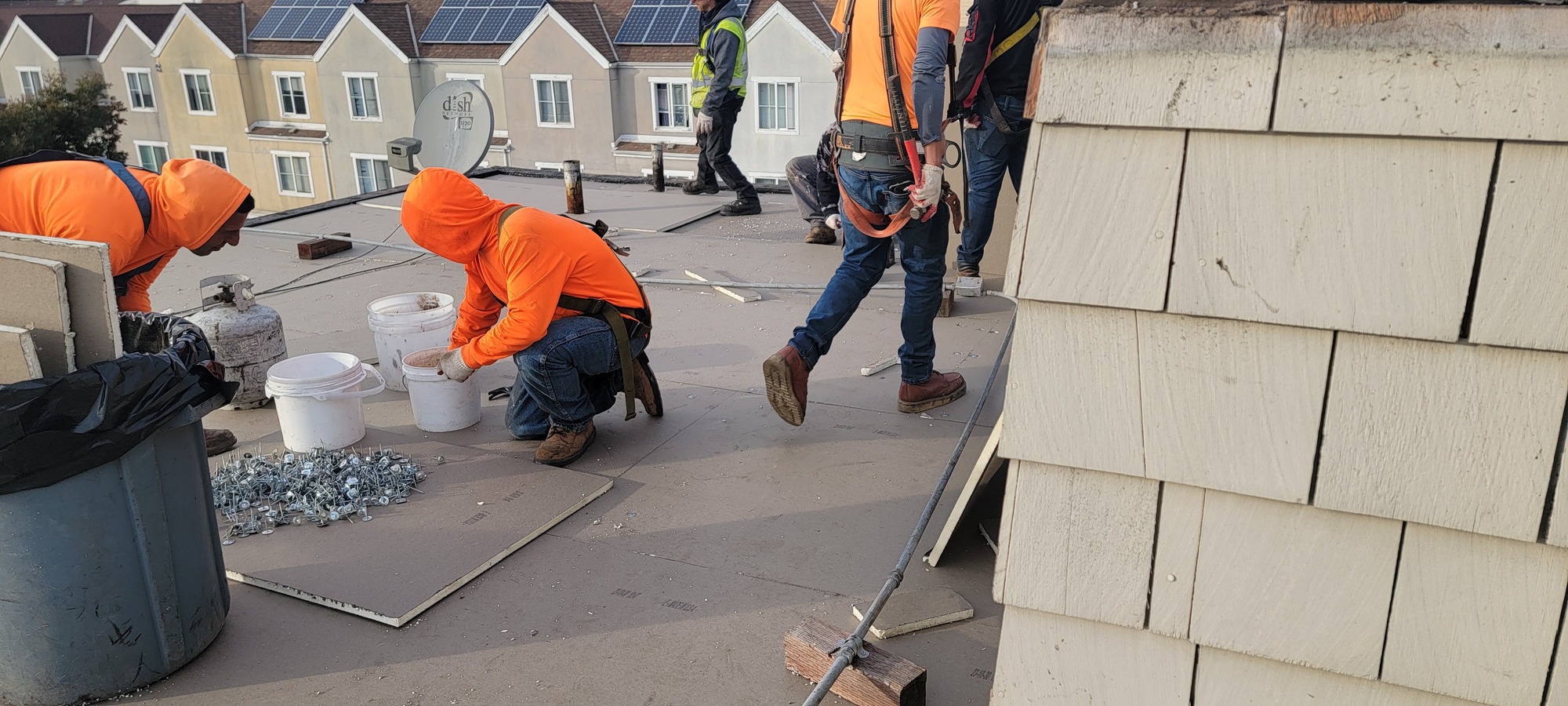
The Sunset District is one of the foggiest urban neighborhoods in California. Marine layer rolls in off Ocean Beach most summer evenings, condenses on cool roof surfaces overnight, and often doesn't fully burn off until late morning. For homeowners west of 19th Avenue, that constant moisture exposure is the single biggest factor in how long any roof lasts — and it changes which materials are actually worth installing.
On low-slope and flat sections (which describe most of the Sunset's attached stucco homes), our default recommendation is white or light-gray TPO single-ply membrane, or a modified bitumen torch-down system. Both handle constant marine moisture far better than older built-up tar-and-gravel roofs, and both can be detailed cleanly around the shallow parapets typical of Sunset architecture. TPO has the edge on reflectivity and clean appearance; modified bitumen has the edge on impact resistance and field repair-ability. Either works in the fog belt; both will fail prematurely if drainage isn't maintained.
On the pitched sections common in the Inner Sunset and on corner properties, we recommend architectural composition shingles rated for high wind (the Sunset gets meaningful gusts off the ocean) with a high-quality synthetic underlayment underneath. We avoid wood shake — it traps moisture catastrophically in this climate, and Class A fire requirements have made it impractical anyway. Metal standing-seam is also a strong fit and will outlast composition by decades, though the cost premium is significant.
What we steer Sunset homeowners away from: dark-colored single-ply on south-facing exposures (heat-cycling problems), thin three-tab composition shingles (wind uplift failures), and any system that relies on field-applied sealants as a primary waterproofing layer (they don't last in this much moisture). We also push hard against roof coatings as a substitute for actual replacement on roofs that are structurally past their service life — coatings are great as preventive maintenance on a sound roof and a waste of money on a failing one.
Regardless of material, the failure mode in the Sunset is almost always at the edges, penetrations, and drains — not the field of the roof. That means the quality of detailing and ongoing drainage maintenance matters more than which top-tier membrane you pick. We do free on-roof inspections for Sunset homeowners — see our
Need an honest assessment on a Sunset home? Visit our Sunset District service area page or call 415-872-9300.