By Ace Roofing & Construction Published Last updated
Torch down vs TPO comes down to this: torch-down (modified bitumen) is a thick, layered asphalt-based roof that is tough and easy to patch, while TPO is a single-ply white membrane with welded seams that reflects sun well and suits large, open roofs. Both are solid choices for San Francisco flat roofs. The better one depends on the building, the roof's shape, how much people walk on it, and how you plan to maintain it.
We install and repair both, so we don't have a reason to push one over the other. Here's how they actually compare.
What torch-down and TPO actually are
Torch-down (modified bitumen)
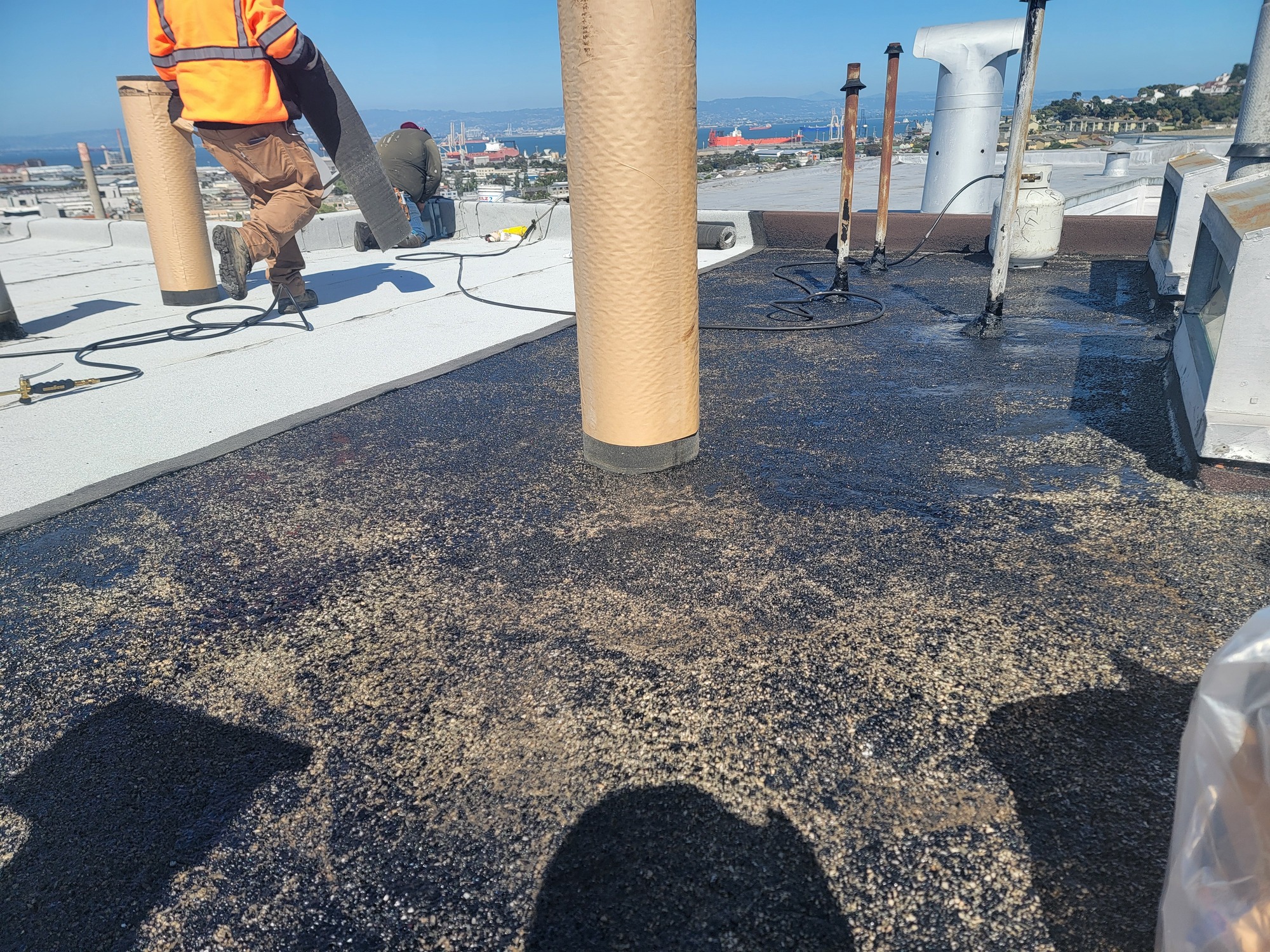
Torch-down is a type of modified bitumen roofing. It comes in rolls of asphalt blended with modifiers and reinforced with a fabric mat. The installer heats the underside with a torch so it melts and bonds to the layer below. Most systems are two layers: a base sheet and a cap sheet, often with a granulated surface that protects against sun. It has been used on San Francisco roofs for decades.
TPO (thermoplastic polyolefin)
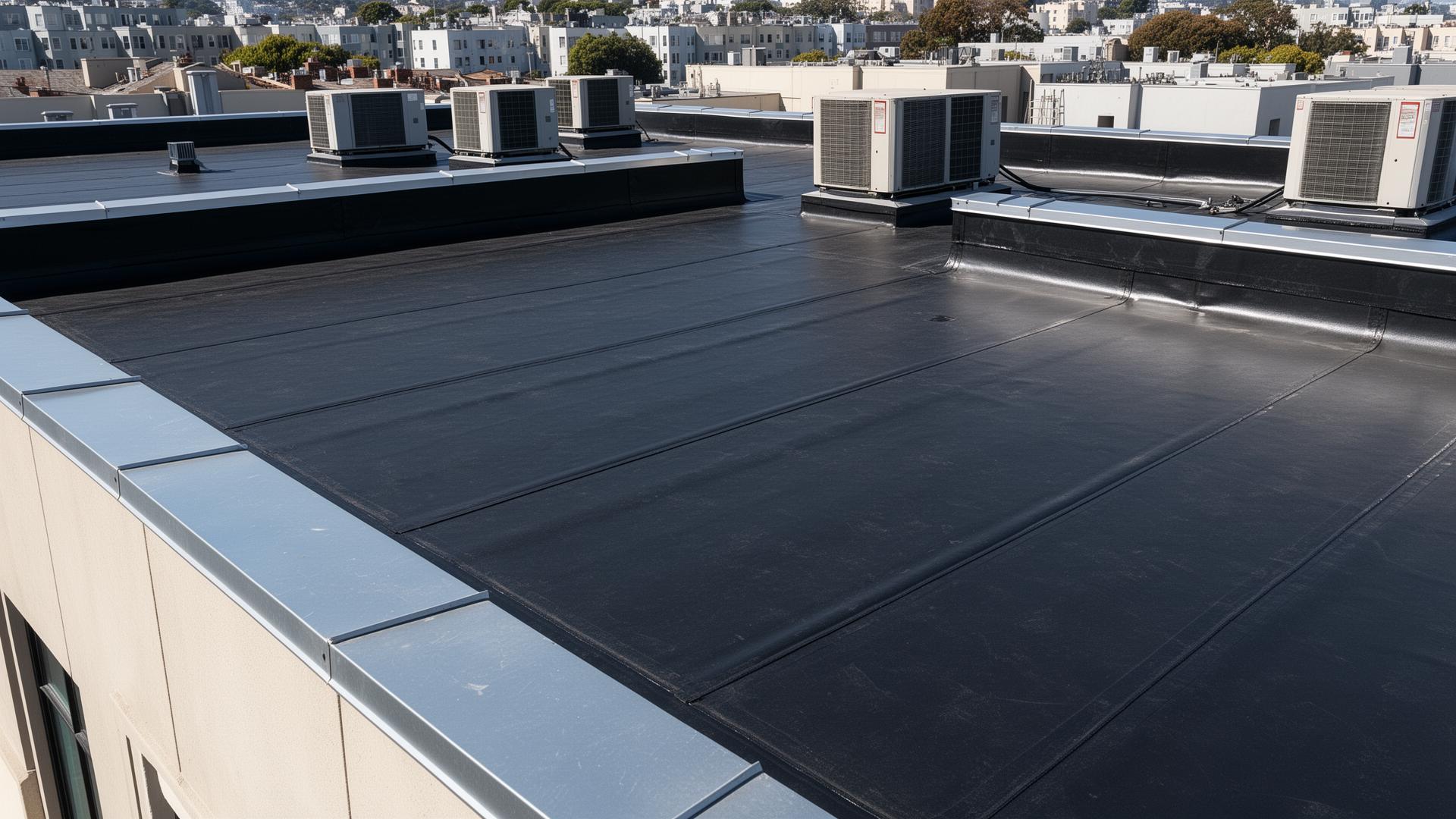
TPO is a single-ply membrane, usually white, that comes in wide sheets. The seams are joined with hot air, which fuses the material into one continuous sheet. It's mechanically fastened or adhered over insulation or a cover board. The white surface reflects a lot of sunlight, which can help keep top-floor rooms cooler.
Durability and lifespan
In general terms, a well-installed TPO roof is commonly expected to last around 20 to 30 years, and torch-down modified bitumen around 15 to 25 years. Those are broad industry ranges, not promises. In our experience, drainage and installation quality affect lifespan more than the material choice does. A great membrane on a roof that ponds water will wear out early; a modest one on a roof that drains well can outlast its range.
Torch-down's thickness makes it forgiving of foot traffic and minor impacts. TPO is thinner, but its welded seams are strong when done right. Thicker TPO membranes are available and are worth considering on roofs that will see regular use.
For more on how materials age in our climate, see how long a roof lasts in the Bay Area.
How they handle fog, salt air and sun
San Francisco gives roofs two very different kinds of stress. In the western neighborhoods — the Sunset, Richmond, and areas near the ocean — roofs stay damp for long stretches from fog and get exposure to salt air. In the eastern neighborhoods like Potrero Hill, SoMa and the Mission, roofs get more direct sun and heat.
- Sun and heat: UV breaks down roofing over time. TPO's white surface reflects much of it. Torch-down relies on its granulated cap sheet or a reflective coating for protection.
- Moisture and fog: both systems are waterproof when intact. Constant dampness mainly matters at the weak points — seams, flashings and drains — and encourages moss and debris buildup that hold water against the roof.
- Temperature swings: materials expand and contract daily. Well-detailed flashing and properly made seams handle this; poorly done details are where we see failures.
Maintenance and repairs
This is where the two differ most for homeowners.
Torch-down is very repair-friendly. A blister, a failed lap or a small puncture can be cut out and patched with new material torched into place. Because the system is layered asphalt, new and old bond well together for many years. This fits our repair-before-replace approach: a torch-down roof with sound insulation underneath can often be kept going with targeted repairs.
TPO repairs are also straightforward when the membrane is still in good shape — a clean patch hot-air welded over the problem. As TPO ages, older membranes can be harder to weld to, which can limit patching late in its life.
Either way, the routine maintenance is the same: keep drains and scuppers clear, check flashing at walls and penetrations once a year, and look for ponding. Our flat roofing service includes repairs for both systems.
Installation and safety on tight SF lots
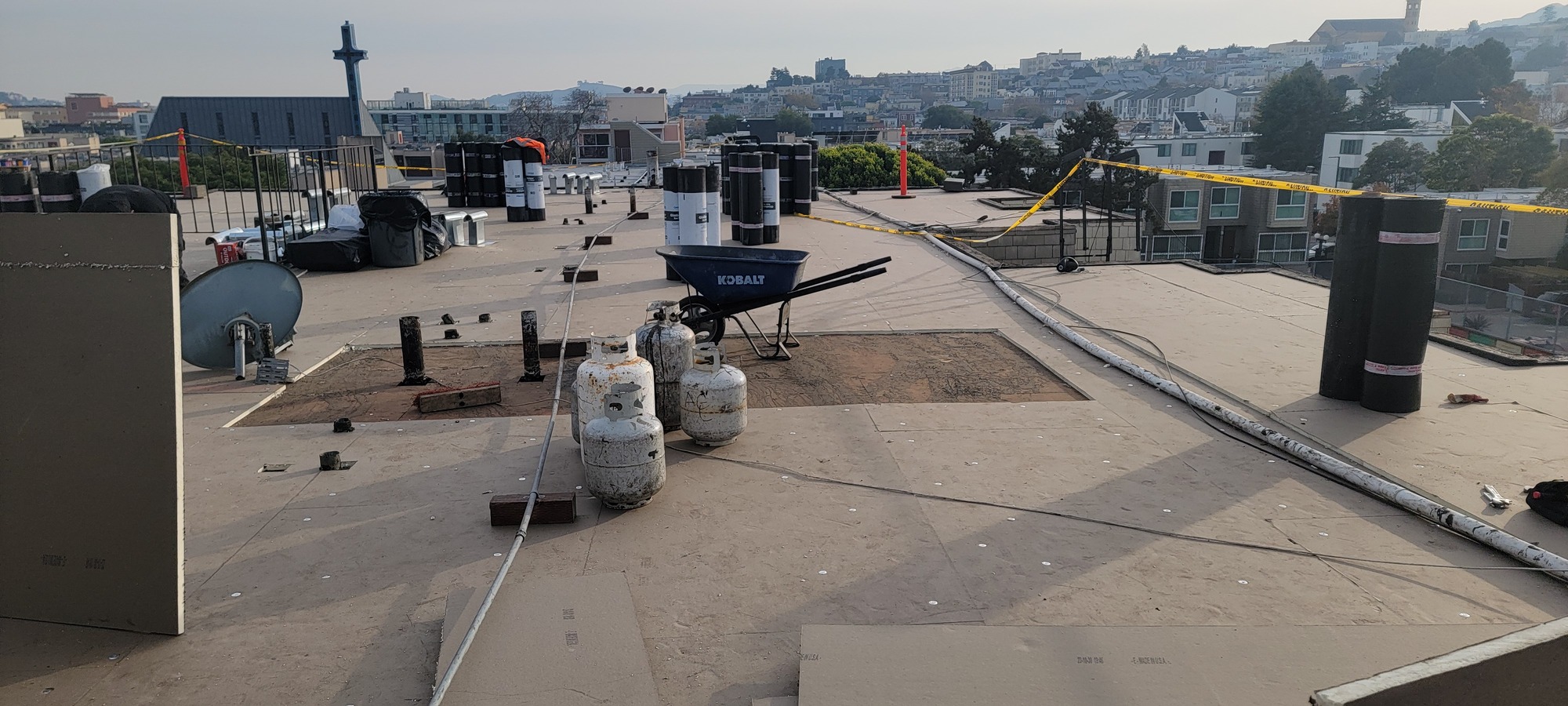
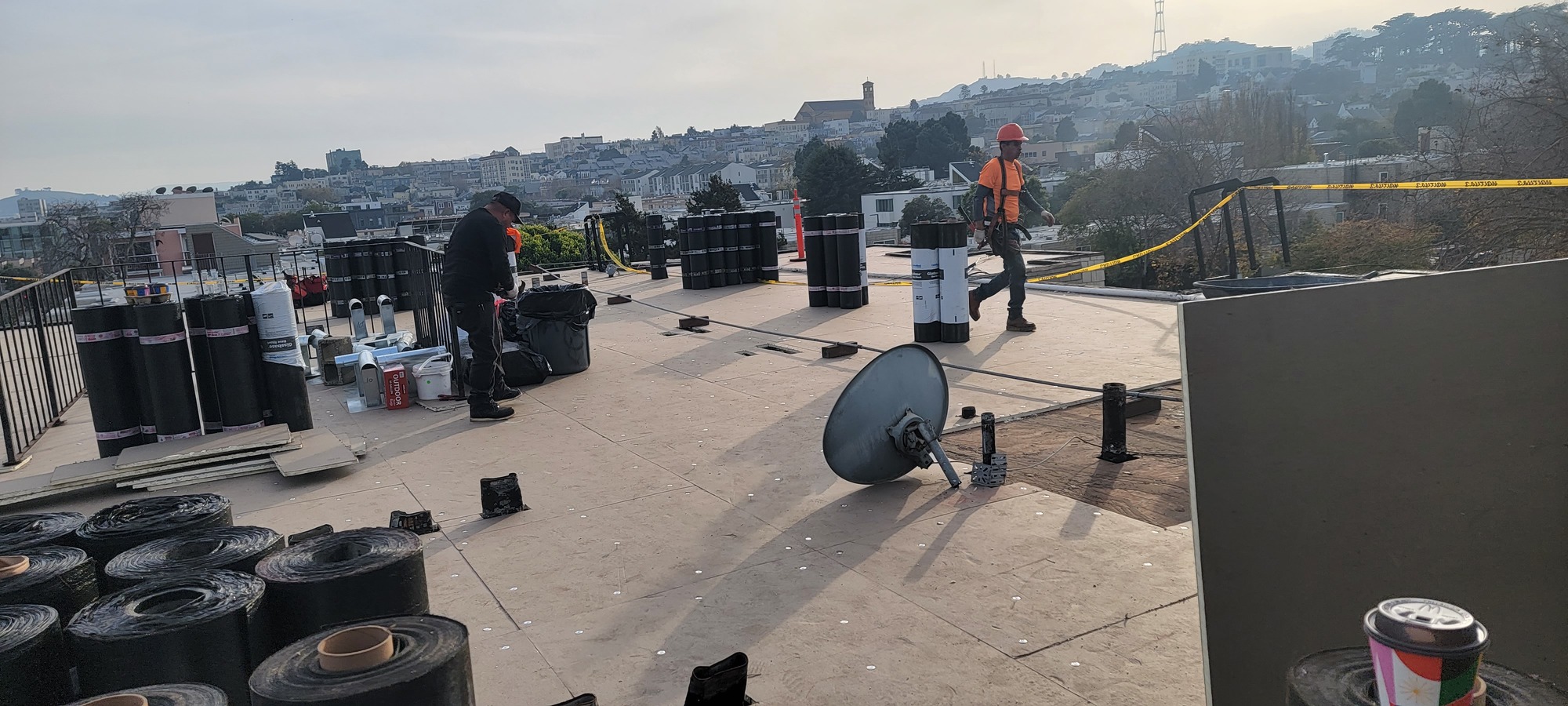
Torch-down uses an open flame, which means it has to be installed by a crew trained in torch safety, with extra care around wood framing, parapets, vents and neighboring buildings. On attached San Francisco buildings, that care matters. Some details — like tight spots next to wood siding — may call for a different method, such as self-adhered sheets, instead of a torch.
TPO uses hot-air welders rather than a flame, which some building owners prefer, especially on roofs with lots of wood around the edges.
Which system fits which building
Torch-down is often a good fit for
- Small and mid-size flat sections on Victorians, Edwardians and row houses
- Roofs with lots of penetrations and odd shapes, where layered patches are easy
- Roofs that get foot traffic for maintenance, solar or decks with walk pads
- Owners who want a roof that's easy to repair over time
TPO is often a good fit for
- Large, open, simple roofs on multi-unit and commercial buildings
- Top floors that run hot, where a reflective roof helps
- Buildings where an open flame is a concern
Neither choice is right for every roof. When we come out, we look at your roof's size, drainage, existing layers and what's on it, then recommend the system that fits — and tell you if your current roof just needs a repair. If you're planning a full replacement, our re-roofing page explains what that involves, and what drives roof replacement cost covers the budget side.
Thinking about cost over the life of the roof
Upfront price is only part of the picture. A roof that is easy and inexpensive to patch can cost less to own over twenty years than one that is cheaper to install but harder to maintain. Ask any roofer how they would repair the system they're quoting five or ten years from now, and what routine maintenance it needs.
On either system, the biggest long-term savings come from drainage that works and from catching small problems early. A yearly check and clear drains do more for a flat roof's lifespan than the choice between torch-down and TPO.
Where modified bitumen and built-up roofs fit in
You may also hear about cold-applied modified bitumen and older built-up (tar and gravel) roofs. Many older SF buildings still have built-up roofs. We wrote a broader overview in TPO vs torch-down vs modified bitumen if you want the wider picture.
Frequently Asked Questions
Is TPO better than torch down?
Not across the board. TPO reflects sun well and suits large, simple roofs. Torch-down is thicker and very easy to patch, which suits smaller and more complex flat roofs. The right choice depends on the building.
Which lasts longer, torch down or TPO?
Broad industry ranges put TPO around 20–30 years and torch-down around 15–25 years, but drainage and installation quality affect lifespan more than the material. A roof that ponds water will wear out early either way.
Can you put TPO over an existing torch-down roof?
Sometimes, depending on how many layers are already there, the condition of the existing roof and insulation, and local code. In many cases a tear-off is the better choice so wet or damaged material isn't trapped underneath.
Is torch down roofing safe?
When installed by a trained crew following torch safety practices, yes. Extra care is needed around wood framing and attached buildings, and some details may call for a non-torch method.
Which is easier to repair?
Torch-down is generally the easiest to patch at any age. TPO is easy to repair while the membrane is newer; very old TPO can be harder to weld new material to.
Get a free, no-pressure roof inspection
Family-owned in San Francisco since 1996. We'll tell you honestly whether a repair will do. CA Contractor License #C39 1062496.