By Ace Roofing & Construction Published Last updated
Understanding the roof and its condition
SoMa's commercial flat roofs do more work than almost any other roof inventory in San Francisco. They host HVAC equipment, solar arrays, satellite dishes, roof decks, and sometimes all of the above. They sit in one of the warmest and sunniest microclimates in the city. And they have multiple contractors walking on them every year — for HVAC service, solar maintenance, AT&T installs, and more. The result: SoMa flat roofs need a maintenance cycle, not just inspections.
Our recommended SoMa commercial maintenance program is twice yearly, timed to the seasons. The first visit, in late spring after pollen drop and before summer heat, focuses on cleaning every drain and scupper, removing debris dams behind parapet walls, checking every seam and termination bar, and re-sealing any flashings that have lifted from thermal cycling. The second visit, in late fall before the rains, repeats the drain clearing and adds a full inspection of HVAC penetrations, solar array attachment points, and any equipment that's been added or moved during the year.
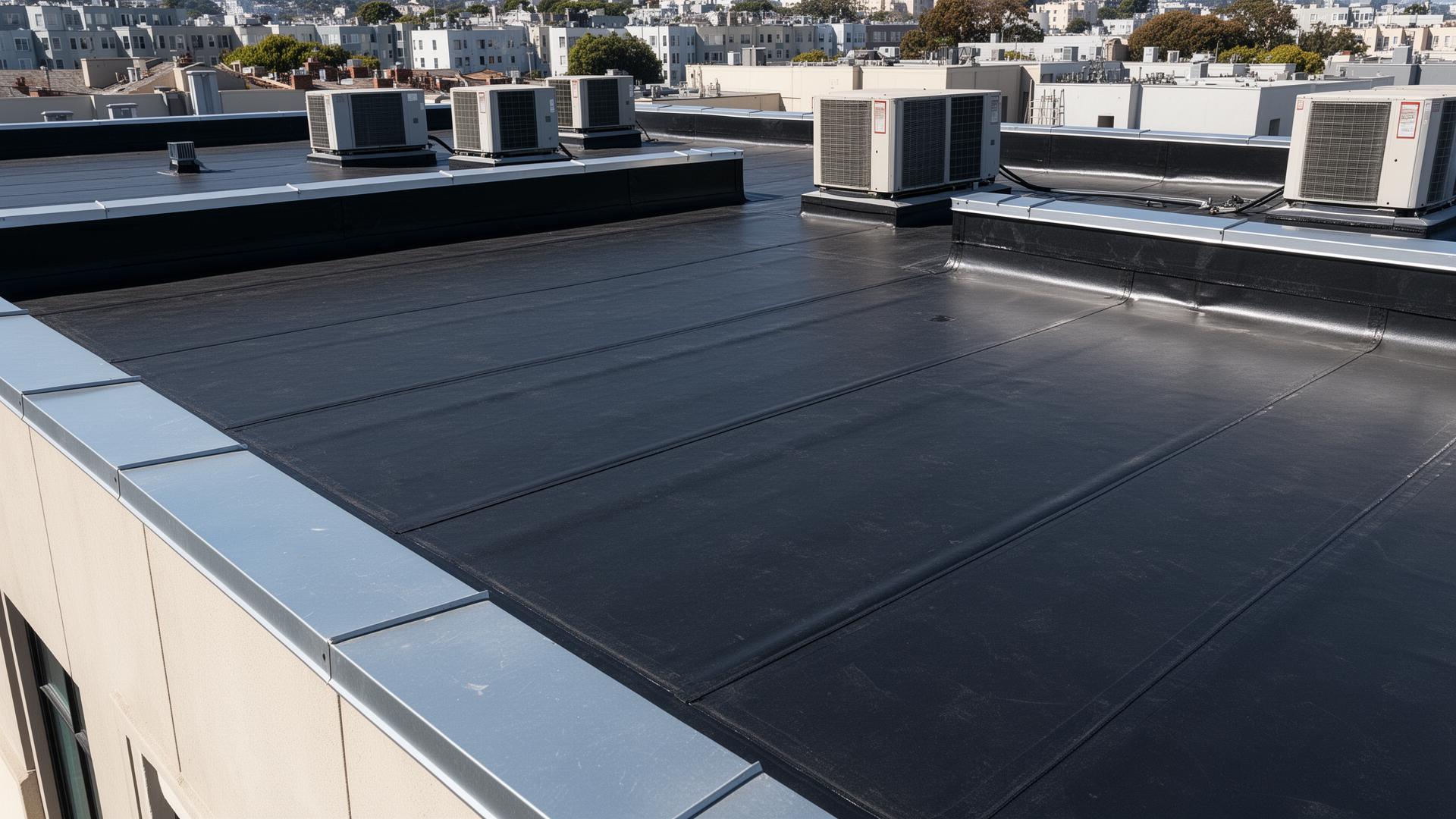
On TPO single-ply, the most common SoMa failure modes are seam lift at field-welded laps (especially around HVAC curbs where foot traffic is heavy), punctures from dropped tools or sharp HVAC components, and termination bar fastener pull-out at parapets. All three are catchable in a 90-minute biannual visit and repairable in another 30 minutes. Catching them early is the difference between a $200 repair and a $4,000 interior water damage claim.
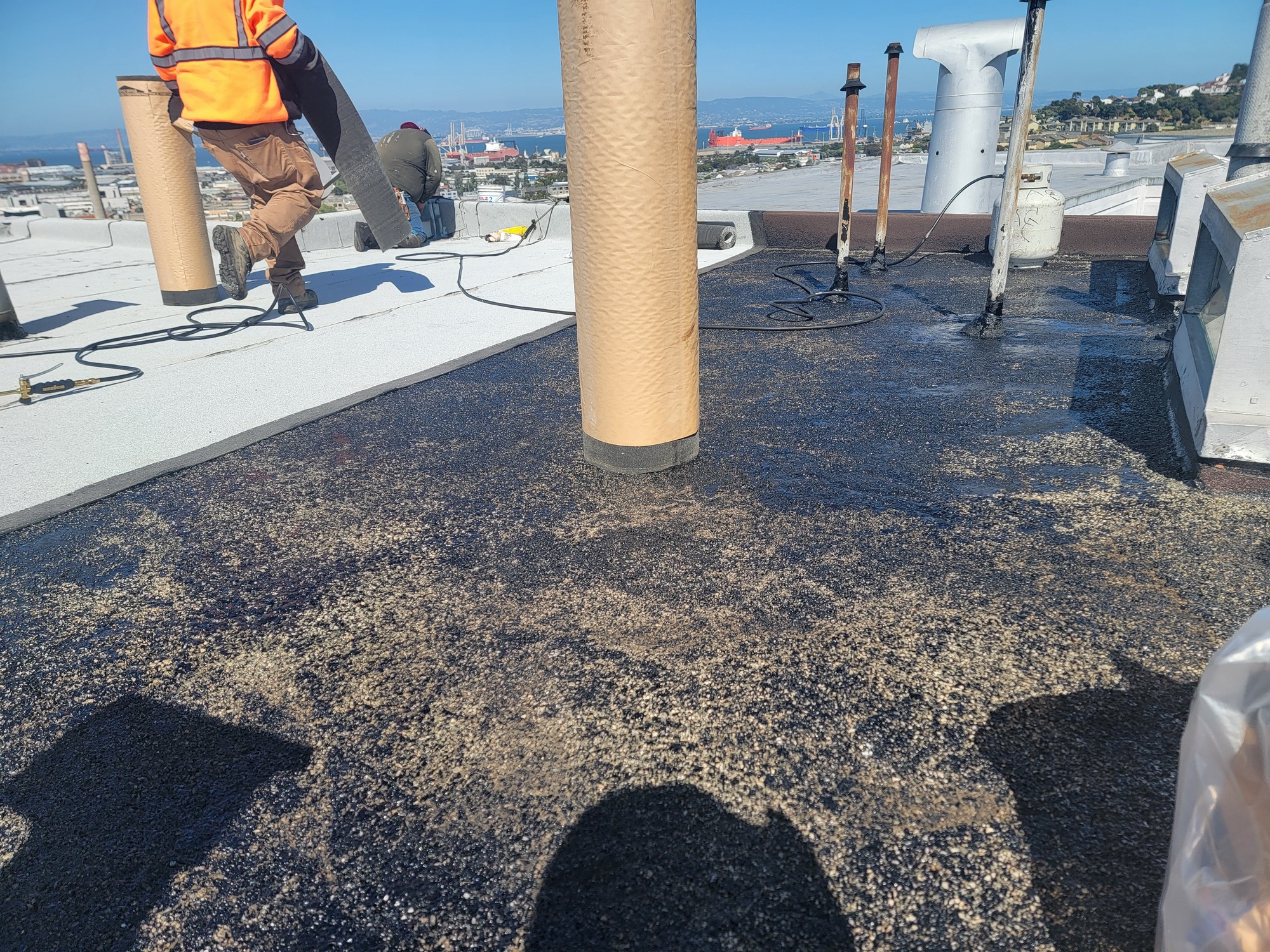
On modified bitumen and built-up systems (still common on older SoMa buildings), the failure pattern is different: granule loss in high-sun areas, alligatoring of the top coat, and seam separation at laps that have been walked on too many times. These also benefit from biannual maintenance — granule replacement and a fresh aluminum-pigmented coat can extend service life materially when done before the underlying bitumen has actually failed.
Drainage is the universal issue. SoMa rooftops collect dust, leaves blown in from street trees, HVAC filter debris, and bird nesting material — and clogged drains turn even a perfectly-installed roof into a swimming pool that finds every weak point. Half the SoMa leak calls we go on are pure drainage problems with a functional membrane. Cleaning drains is the highest-ROI maintenance task on any commercial flat roof in this neighborhood.
If you own or manage a SoMa building and don't have a roofing maintenance contract, get one — ours or someone else's. Visit our SoMa service area page or call 415-872-9300 to schedule a free assessment.
Build a roof access and maintenance record
Start a roof log with the existing system, installation records, drain locations and photographs of major curbs and penetrations. Record which trades visit the roof and what they change. If a leak follows an equipment service call, that record can help locate a displaced support, puncture or newly added penetration without assuming the entire membrane failed.
Provide a defined service path where suitable walk pads or protection are part of the roof assembly. Loose boards, improvised pavers and unrestrained cable bundles can damage the surface or obstruct drainage. Ask roofing and equipment contractors to agree on compatible supports and flashing methods. The waterproofing should not depend on another trade applying an unspecified sealant around a new opening.
During maintenance, inspect drains and overflow provisions as a system. Removing debris from a basket may not clear a restriction lower in the pipe. Stains at the parapet or around a drain can show where water has backed up. Record low spots and persistent ponding so you can determine whether they are changing rather than treating every wet patch as a cosmetic problem.
For buildings with roof decks, removable finishes and accessible drain covers are important. A finished terrace can hide a developing membrane defect beneath its surface. A maintenance scope should state which areas are actually inspected and which remain concealed. Coordinate any opening of deck finishes with occupants and the building manager so a thorough assessment does not create an unexpected disruption.
Visit our SoMa service area and Emeryville page for equipment-heavy roof considerations. Explore flat-roof work or drain repair. Contact Ace with the roof system and access arrangements to discuss maintenance that addresses your building’s real service traffic, outlet layout and concealed areas.
Keep useful records after the assessment
When a building changes hands or management companies, transfer the roof log and warranty records alongside other property documents. Without those records, a new manager may approve incompatible patches or allow equipment changes at a sensitive location. Include access restrictions and contact details for the contractor responsible for the installed assembly. For a planned equipment upgrade, discuss the waterproofing before supports or curbs are installed, not after a leak appears. A short coordination conversation can prevent uncertainty over who finishes a penetration and who verifies the surrounding membrane. Document the completed changes so the next scheduled inspection has an accurate baseline.
Get a free, no-pressure roof inspection
Family-owned in San Francisco since 1996. We'll tell you honestly whether a repair will do. CA Contractor License #C39 1062496.