By Ace Roofing & Construction Published Last updated
Most skylight leaks come from one of three places: the flashing around the skylight curb, the seals between the glass and the frame, or the roof around the skylight. Sometimes what looks like a leak is actually condensation — moisture from inside the house forming on the cold glass. Many skylight leaks can be fixed by re-flashing or resealing. Replacement makes sense when the unit itself is cracked, fogged between panes, or worn out.
Here's how to figure out which one you have, and what the fix usually looks like.
First: is it a leak or condensation?
This is worth sorting out first, because the fixes are completely different.
Signs it's condensation
- Water appears on cold mornings, even when it hasn't rained
- Droplets form evenly across the inside of the glass
- It's worse in bathrooms, kitchens or rooms with lots of moisture
- The frame is wet all the way around rather than in one spot
Signs it's a real leak
- Water shows up during or right after rain
- Drips or stains come from one corner or side
- Stains on the ceiling or drywall around the skylight shaft
- Peeling paint or soft drywall on the skylight well
Condensation is a ventilation and humidity issue — better airflow, a bathroom fan, or a vented skylight can help. A real leak is a roofing problem. In foggy neighborhoods, condensation is common, so it's worth watching when the water appears.
Cause 1: Failed curb flashing
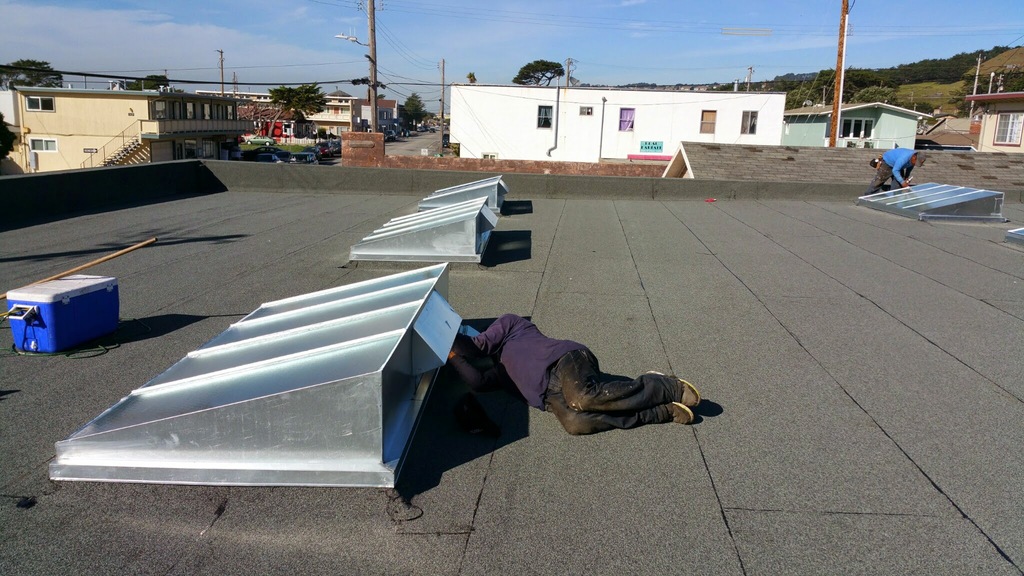
Most skylights sit on a raised box called a curb. Flashing seals the joint between that curb and the roof. Over time, flashing can pull loose, rust, crack or be installed poorly from the start. On flat roofs, water that ponds near the skylight puts extra pressure on this joint.
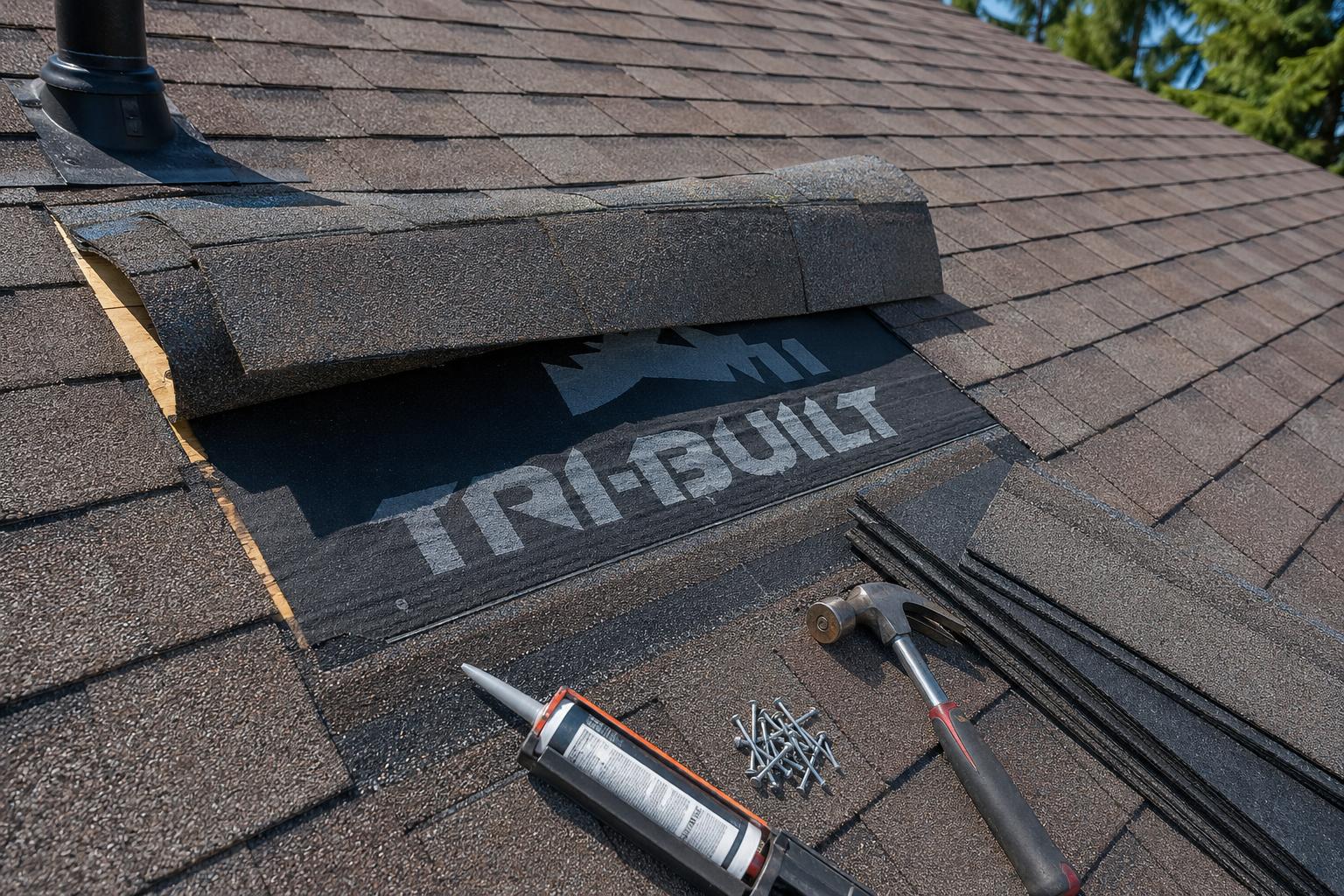
This is the most common source of skylight leaks we see, and it's very repairable. We remove the old flashing, check the curb for rot, and install new flashing tied properly into the roof. On flat roofs, that means integrating it into the membrane — whether torch-down or TPO.
Cause 2: Worn seals and gaskets
The glass or acrylic dome is held in a frame with seals or gaskets. Sun and temperature swings dry them out over the years. When they crack or shrink, water gets in between the glazing and the frame.
Resealing can work when the frame and glazing are still in good shape. If the seals in a double-pane unit have failed, you'll often see fog or moisture trapped between the panes. That usually means the glazing unit needs replacing.
Cause 3: The roof around the skylight
Sometimes the skylight is fine and the leak is from the roof just above or around it — a failed shingle, a cracked membrane, or a clogged drain that backs water up toward the skylight. Water then runs down the curb and looks like a skylight leak.
That's why a roofer checks the area around the skylight, not just the skylight itself. Our guide to flat roof leak repair covers the roof-side causes.
Cause 4: Cracked or damaged glazing
Older plastic domes can turn brittle and crack, especially after years in the sun. Falling branches and debris can also crack them. A cracked dome or pane usually means the unit needs to be replaced.
Repair vs replacement
We believe in repair before replace — that applies to skylights too.
Repair usually makes sense when
- The leak is from the curb flashing or the roof around the skylight
- The glazing is intact and clear
- The frame is solid and the curb isn't rotted
Replacement usually makes sense when
- The dome or glass is cracked or brittle
- Fog or moisture is trapped between panes
- The frame is corroded or warped
- You're re-roofing anyway and the skylight is older — it's easier to replace while the roof is open
If you're planning a re-roof, it's a good time to deal with older skylights. See our re-roofing page.
What affects the cost of a skylight repair
Every skylight job is different, so we don't quote prices without seeing it. The main factors are whether the fix is flashing, seals or a full replacement; the size and type of skylight; how easy it is to reach the roof; whether the curb has rot that needs repair; and the condition of the roof around it. A repair is almost always less expensive than a replacement, which is one more reason we look at repair first.
How to prevent skylight leaks
Most skylight leaks are preventable with a little routine attention.
- Keep the roof around the skylight clear of leaves and debris, especially on flat roofs
- Make sure nearby drains are clear so water doesn't pond against the curb
- Have the curb flashing and seals checked once a year, ideally in the fall
- Watch the skylight well inside for new stains or peeling paint after storms
- Run bathroom and kitchen fans to cut down on condensation
Our rainy season checklist includes skylights along with the rest of the roof.
Skylights on flat roofs vs pitched roofs
On pitched roofs, water flows past the skylight, and the flashing at the uphill side does the most work. On flat roofs, water can sit around the curb, so the curb height and how the flashing ties into the membrane matter even more. Low curbs on older flat-roof skylights are a common source of leaks, and raising the curb during a repair or re-roof can help.
Either way, the repair should treat the skylight and the roof around it as one system. Sealing just the glass when the flashing has failed — or the other way around — usually means the leak comes back.
What to do now
If water is coming in, protect the floor and furniture, take photos, and note when it happens. Our guide on what to do when your roof leaks during rain has the step-by-step version. Then book a repair.
Our skylight and drain repair service handles curb re-flashing, resealing and replacements. We also handle general roof repair when the problem is in the surrounding roof. We work across SF, including Noe Valley, Glen Park and the Marina.
Frequently Asked Questions
Why does my skylight leak only when it rains?
A leak that only appears during or after rain usually points to failed curb flashing, worn seals, or a problem in the roof around the skylight, rather than condensation.
How do I know if it's condensation or a leak?
Condensation tends to appear on cold mornings, even without rain, and forms evenly across the glass. A leak usually shows up with rain and comes from one spot or side.
Can a leaking skylight be repaired, or does it need replacing?
Many skylight leaks are fixed by re-flashing the curb or resealing the frame. Replacement makes sense when the glazing is cracked, fogged between panes, or the frame is worn out.
Should I replace my skylight when I re-roof?
If the skylight is older or showing wear, a re-roof is a good time to replace it, since the roof around it is already open. If it's in good condition, it can usually be re-flashed into the new roof.
Get a free, no-pressure roof inspection
Family-owned in San Francisco since 1996. We'll tell you honestly whether a repair will do. CA Contractor License #C39 1062496.