By Ace Roofing & Construction Published Last updated
Understanding the roof and its condition
The calls we get during the first big atmospheric river of the season all sound the same: water is coming through a ceiling, it started an hour ago, and it is getting worse. What you do in the first thirty minutes matters more than most homeowners realize, because the majority of the expense in a leak event is not the roof repair — it is the drywall, insulation, flooring, and mold remediation underneath it.
First, prioritize safety. Keep people away from a bulging or sagging ceiling, do not stand beneath it and do not puncture it yourself. Move belongings only if the area is safe. Place a container under an ordinary drip only where the ceiling is stable. Stay away from wet electrical fixtures and seek qualified help if water is near wiring.
Second, document everything before you clean up. Photograph the stain, the drip path, the ceiling, and any damaged contents, with timestamps. If you end up filing an insurance claim, sudden storm-driven damage is usually covered while gradual deferred maintenance usually is not, and photos taken during the event are the strongest evidence you will ever have of which one this was.
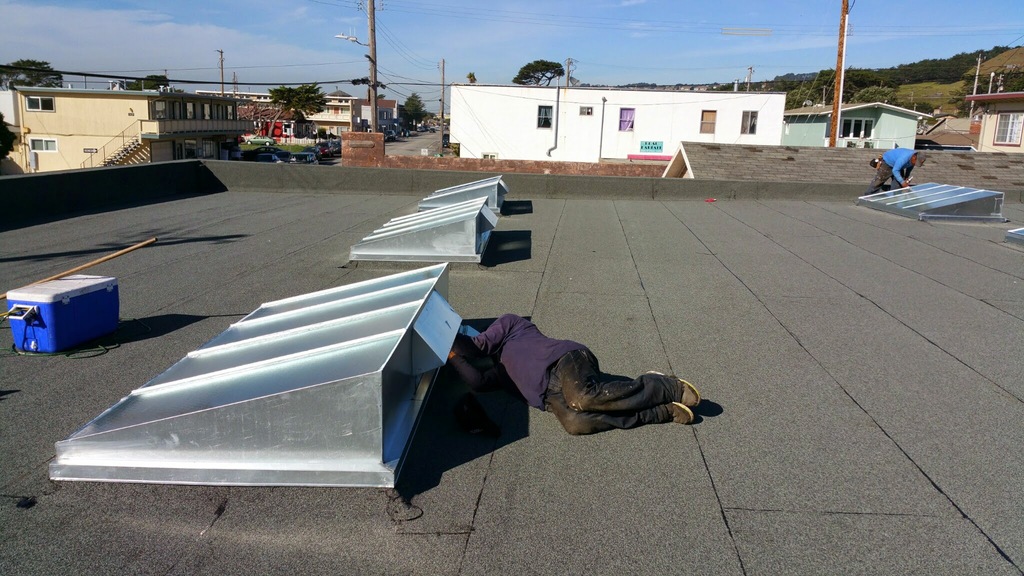
Third, do not go on the roof during the storm. Wet low-slope membrane and wet composition shingle are both genuinely dangerous, and San Francisco's flat roofs are frequently three stories up behind a parapet with no fall protection. Nothing you can do up there in the rain will outperform a tarp installed properly afterward by someone with the right equipment.
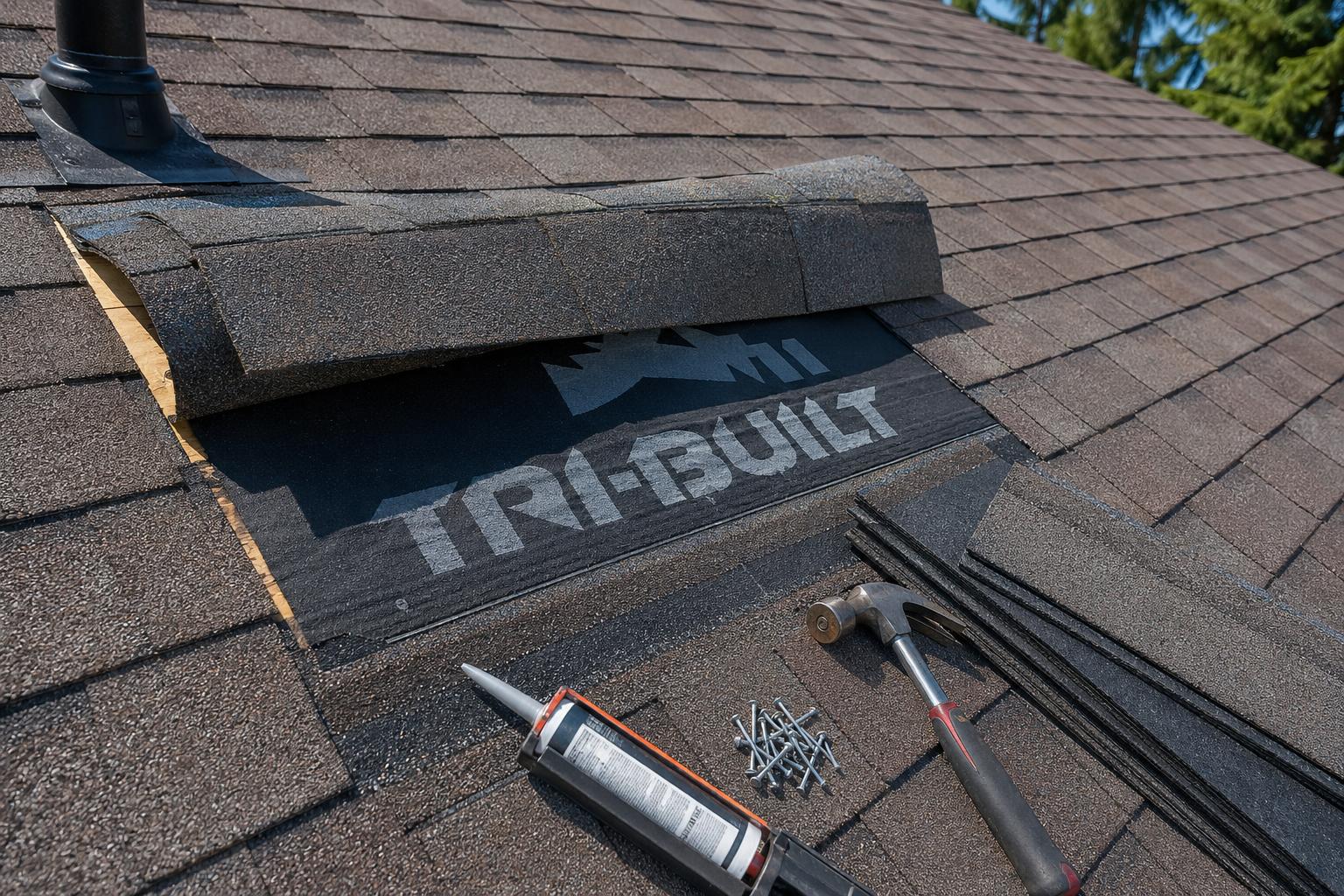
When we arrive, the first job is stopping the water, not selling a roof. Often that means a temporary membrane patch or a properly ballasted tarp, followed by a return visit once the deck has dried out and the actual source is visible. Leaks travel — the entry point is frequently many feet uphill from the interior stain, commonly at a failed flashing, a clogged drain, or a seam that opened in the sun rather than at some dramatic hole. We give you the permanent repair quote after we can see the real cause, and if that quote is $600 instead of a re-roof, we will tell you so.
If you are dealing with an active leak right now, call 415-872-9300. We respond next day for active leaks across San Francisco and will talk you through containment on the phone in the meantime.
A safer response while you wait for help
Keep people away from a sagging, bulging or waterlogged ceiling. Do not stand beneath it or puncture it yourself: saturated ceiling materials may collapse, and wiring can be hidden above the surface. If water is near an outlet, appliance or light fitting, avoid the area and get qualified help. Only isolate power if you can do so from a dry, safe location. A bucket is appropriate for an ordinary drip where the ceiling is stable; it is not protection from a potentially collapsing ceiling.
Move dry belongings out of the affected room if this can be done safely, and photograph the visible damage from a safe position. Note when the rain began, when the leak appeared and whether wind was strong. Do not climb onto the roof during rain or darkness. Wet membranes, ladders and shingles are hazardous, and an unsecured tarp can make the situation worse rather than providing useful protection.
When you call, explain whether water is still entering, whether the ceiling is distorted and whether electrical fixtures are involved. Share the address, building height, available access and any previous leak repair. A roofer may need to make the area weather-resistant first and return for permanent work under suitable conditions. Ask what the temporary measure does, what it cannot guarantee and how the follow-up assessment will be arranged.
Once the immediate problem is controlled, review the likely entry point and the condition of the surrounding roof. A stain does not necessarily mark the defect directly above it. Water can travel along framing from a drain, skylight or wall junction. Keep the repair photos and any cause-of-loss explanation with your insurance records. Coverage depends on your policy and the cause; a roofing estimate alone does not establish that an insurer will pay.
Our roof repair service covers diagnosis and repair planning. Owners in the Mission District and Sunset District can find local drainage guidance on their area pages. Contact Ace for advice about access and next steps, and tell us if the situation involves a safety hazard rather than just a small ceiling stain.
Keep useful records after the assessment
After the repair, drying the interior is a separate task from stopping water at the roof. Saturated insulation and concealed wall cavities may need assessment by an appropriate restoration professional. Do not repaint a stain and assume all trapped moisture is gone. Keep the area’s condition documented and ask what signs should prompt another inspection. If a temporary patch was used, make sure there is a clear plan for permanent work. A dry ceiling during one light shower does not necessarily demonstrate performance in a long, windy storm. Explain any recurring symptoms promptly, including when they occur and whether the visible stain has spread.
Frequently Asked Questions
How fast can a roofer get out for an emergency leak in San Francisco?
We respond next day for active leaks across San Francisco, and we'll walk you through temporary containment over the phone the same day you call 415-872-9300.
How much does an emergency roof leak repair cost in SF?
Most emergency leak stops run $400-$1,500 depending on access and the size of the failed area. A permanent repair is quoted separately after the roof dries out and we can see the real source.
Will my homeowners insurance cover a roof leak?
Sudden storm damage is often covered; gradual wear and deferred maintenance usually is not. Photograph everything before you clean up, and ask your roofer for a written cause-of-loss description.
Get a free, no-pressure roof inspection
Family-owned in San Francisco since 1996. We'll tell you honestly whether a repair will do. CA Contractor License #C39 1062496.