April 12, 2026
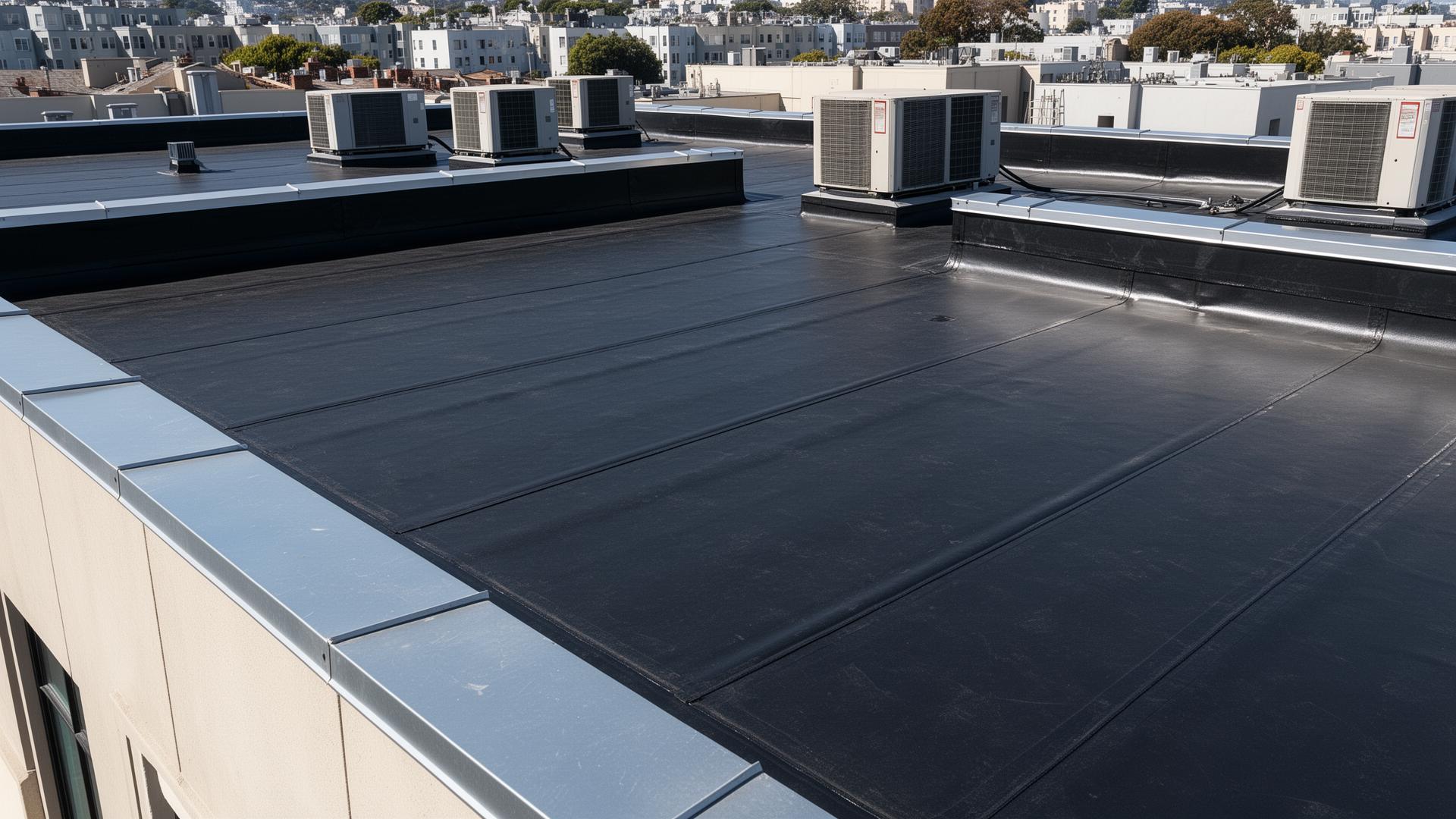
San Francisco's marine layer keeps roofs damp far longer than almost any other California city. The fog rolls in nightly, condenses on cool roof surfaces, and lingers well into the morning. On a low-slope or flat roof — common across the Sunset, Richmond, Bayview, and SoMa — that constant moisture is the single biggest factor in premature failure. It accelerates seam wear, lifts membrane edges, breaks down sealants faster than UV alone would, and lets even minor ponding water find every weak point in the assembly.
Most homeowners assume a leak means the roof itself has failed. After 30 years working SF roofs, our crew sees the opposite far more often: the membrane is fine, but the water has nowhere to go. Clogged scuppers, undersized drains, debris dams behind parapet walls, and pinched downspouts back water up against seams that were never designed to sit submerged. That's why our first move on a flat-roof leak call is almost always a drainage audit, not a tear-off quote.
Seasonal maintenance matters more here than in drier climates. Twice a year — typically late spring after pollen drop and late fall before the rains — we recommend clearing every drain and scupper, inspecting every seam and penetration (vents, skylights, HVAC curbs), and re-sealing any flashing that's lifted. On TPO and torch-down roofs, that simple cycle of attention reliably adds 5 to 10 years of service life and prevents the small leaks that turn into framing rot.
Material choice also matters. For SF's climate we usually steer homeowners toward single-ply TPO or modified bitumen over older built-up tar systems. Both handle thermal cycling and constant damp better, and both can be detailed cleanly around the parapets and irregular shapes typical of San Francisco buildings. Whatever the material, the failure mode in this climate is almost always at the edges and penetrations — not the field — so the quality of detailing is what determines whether your roof lasts 12 years or 25.
If you have a flat roof in San Francisco and you've never had it inspected, get on a maintenance schedule before the next wet season. A two-hour visit and a few hundred dollars of sealant work is a fraction of what interior water damage costs once it reaches drywall, insulation, or framing.